
Why hiring Edgeology is a crucial step in vetting the viability of a data center site
For data center investors, site selection has become an increasingly complex infrastructure decision.
A parcel may have the acreage, power potential, tax incentives, zoning, and development characteristics that make it look attractive on paper. But there is another question that can materially affect the viability of the investment:
Can you actually get the fiber connectivity the site will need and how long will it take to get there?
Fortunately, investors today have access to more connectivity information than ever before.
You can research Internet Exchanges (IXs), carrier hotels, existing data centers, carrier footprints, network maps, and commercially available connectivity intelligence platforms. These resources are valuable. They can help an investment team establish a preliminary understanding of the network ecosystem surrounding a potential site.
But they don’t necessarily tell you the whole story.
That distinction can become critical when millions or hundreds of millions of dollars are at stake.
Start With the Information You Can Find
The first step in fiber diligence is understanding what is already publicly or commercially available.
Internet Exchanges and Carrier Hotels
Regional Internet Exchanges and carrier hotels can provide important clues about the connectivity ecosystem in a market.
An IX can indicate where networks and service providers interconnect and where significant traffic exchange occurs. Carrier hotels can provide another indication of where multiple telecommunications networks converge.
For an investor evaluating a new data center market, understanding the location of these facilities can help establish the broader network geography of the region.
But proximity to an IX or carrier hotel does not automatically mean a prospective site can access the connectivity available there.
The critical question is how that connectivity can actually reach the property.
Existing Data Centers
Existing data centers can also provide valuable intelligence.
If an established facility in the market is on-net, for example, that can demonstrate that one or more carriers have already extended network infrastructure to the building.
That information can help establish that connectivity exists in the area and potentially identify carriers worth investigating.
But again, an existing on-net building does not necessarily mean a new site nearby can obtain the same connectivity.
The distance may be different. The routes may be different. Available capacity may be different. And the cost and timeline to extend connectivity from the existing network to the new property can vary substantially.
Commercial Connectivity Intelligence
There are also sophisticated commercial tools that provide substantially more network intelligence than a simple public web search.
Platforms such as Connectbase provide location-based network intelligence, including provider and serviceability information. Its Network Intelligence capabilities can provide information about providers and network connectivity associated with specific locations.
For an investment team screening multiple sites, this type of data can be extremely useful.
It can help answer preliminary questions such as:
- Which providers appear to serve the area?
- What network infrastructure is nearby?
- Is a building identified as on-net?
- Which providers may have serviceability at a particular location?
- Where are potential connectivity opportunities?
These tools can dramatically improve the initial screening process.
But screening is not the same thing as engineering due diligence.
The Problem With the Map
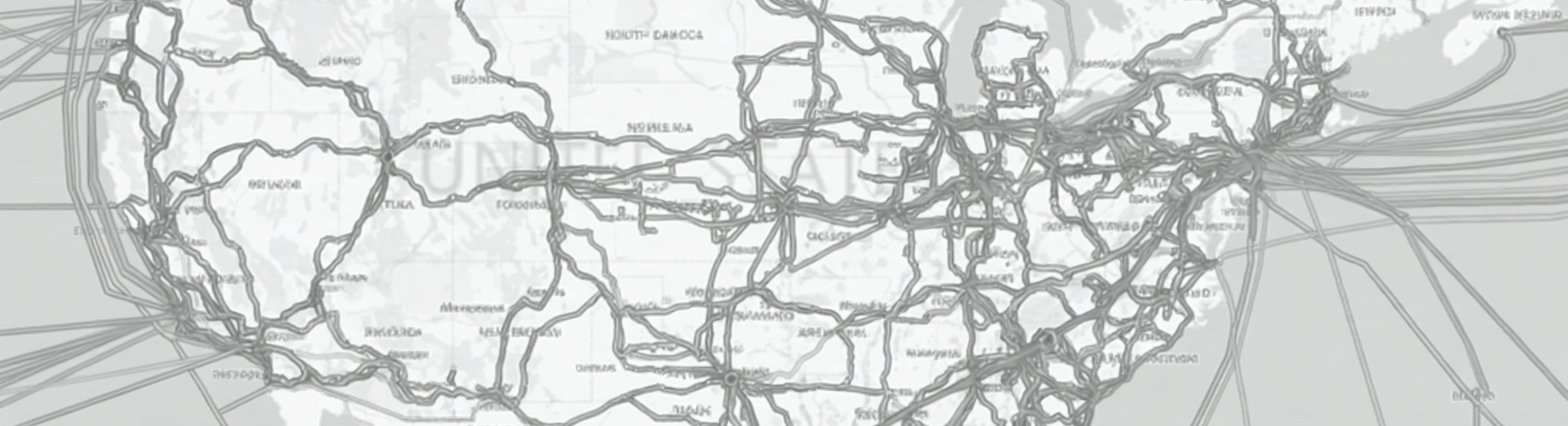
A fiber map can tell you that a route exists.
It may not tell you whether that route has the capacity, ownership, diversity, access, or commercial availability required for your project.
It may not tell you whether the fiber is dark or lit.
It may not tell you whether the network operator has spare capacity.
It may not tell you whether the route can be extended to your property.
And it may not tell you what happens when you need two physically diverse paths instead of one.
Most importantly, publicly available and commercial datasets are representations of an infrastructure ecosystem that is constantly changing.
Networks are being built. Routes are being expanded. Providers are acquiring infrastructure. New projects are being planned. Fiber is being leased, lit, sold, and repurposed.
The map is a snapshot. The network is a moving target.
What the Map Doesn’t Know Can Become an Investment Risk
Consider two hypothetical sites.
Both appear to have fiber nearby.
Both show multiple carriers in the broader market.
Both are within reasonable proximity of an existing data center.
On a high-level connectivity map, they may look similar.
But Site A might have multiple carriers with diverse routes, available capacity, practical access points, and a straightforward path to the property.
Site B might have several fiber routes passing nearby but those routes could converge on the same physical corridor, have limited capacity, require significant construction to reach the property, or depend on difficult rights-of-way.
From an investment perspective, those are two very different sites.
Fiber proximity is not fiber readiness.
That’s why Edgeology goes beyond simply looking at a map.
Edgeology Adds the Missing Layer of Intelligence
Edgeology combines geospatial analysis and available market data with decades of fiber engineering expertise and relationships across the network ecosystem. The company evaluates proposed data center sites for dark and lit fiber availability, capacity, carrier access, route diversity, and scalability.
Its first phase of site assessment focuses on the existing fiber infrastructure surrounding a prospective location, including network ownership, underground and aerial infrastructure, lit and dark capacity, and the ability to support a new data center.
That analysis can answer questions that a generalized connectivity map cannot.
Who actually owns the infrastructure?
Where are the meaningful network paths?
How diverse are those paths?
What capacity may actually be available?
Where are the practical interconnection points?
What would it take to extend connectivity to the site?
What could prevent that extension?
And perhaps most importantly:
What don’t we know yet?
That last question is critical during investment due diligence.
Edgeology’s Network Relationships Matter
There is another layer of intelligence that cannot always be found in a database.
Edgeology works within an ecosystem of carriers, network operators, OSP engineering firms, construction companies, infrastructure providers, and other industry partners. Its stated approach combines industry expertise, geospatial analytics, market data, and relationships with network operators.
Those relationships can provide context that may not yet appear on a commercial map.
A fiber network may be under construction.
A carrier may be planning a new route.
A network operator may be evaluating an expansion.
A new data center development may be creating an opportunity for a carrier to extend infrastructure into a previously underserved market.
That information can matter before the route appears in a database.
For investors evaluating an emerging data center market, knowing what is planned—not simply what already exists—can materially change the connectivity assessment.
New Fiber Can Change the Investment Thesis
This is particularly important in secondary and emerging data center markets.
A site may not have the same fiber density as a major established data center market. That does not necessarily mean the site is unviable.
The real question is whether there is a credible pathway to connectivity.
Edgeology can help evaluate the feasibility of extending existing networks, identify potential route options, facilitate carrier discussions, and coordinate engineering studies when new infrastructure may be required. Its services include fiber infrastructure analysis, dark fiber sourcing, carrier relationship management, OSP planning, connectivity risk assessment, and implementation support.
That distinction is important.
The question shouldn’t simply be:
“Is there fiber here?”
It should be:
“Is there a realistic, scalable, economically and operationally feasible path to the fiber connectivity this project requires?”