
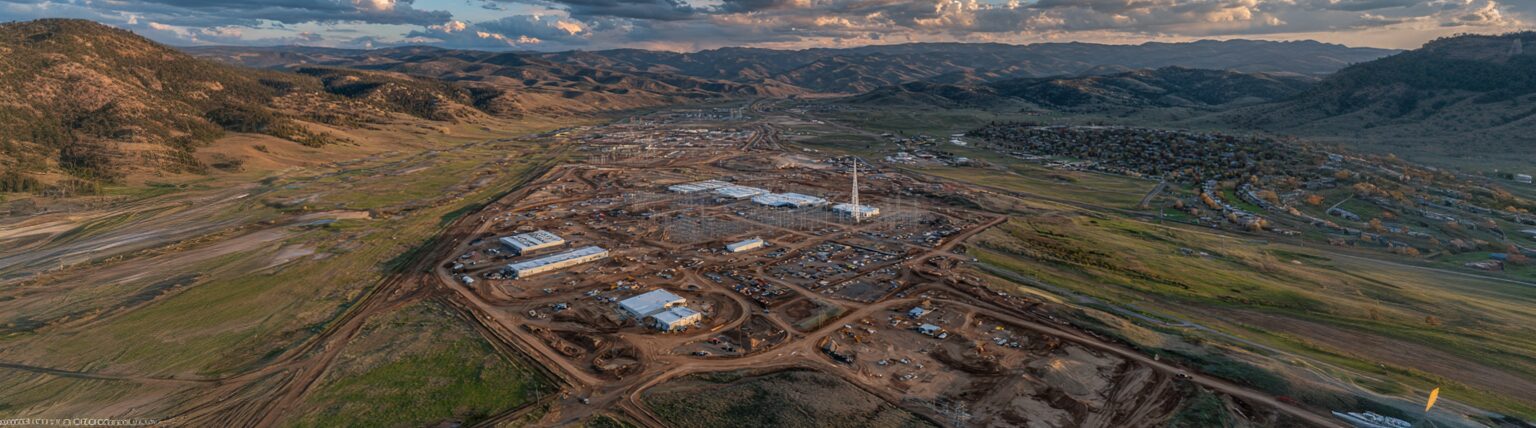
In the race to build AI-driven data centers, success doesn’t start with servers or GPUs it starts with land. But not just any land. The ideal site is the “Goldilocks parcel”: not too constrained, not too remote, and not too expensive to operate. It’s a location where power, connectivity, policy, and economics align just right. In today’s environment, finding that parcel has become one of the most competitive—and strategic—decisions in digital infrastructure.
The New Reality: Why “Good Land” Isn’t Good Enough
AI has fundamentally reshaped what qualifies as a viable data center site. Traditional requirements cheap land and proximity to a metro have been replaced by a far more complex equation. Modern AI facilities demand exponentially more power, advanced cooling, and low-latency connectivity, shrinking the pool of suitable sites dramatically.
At the same time, developers are competing for a limited number of parcels that can support these requirements. The result is a market where site selection is no longer a real estate decision it’s an infrastructure strategy.
Power First, Always
If there is one defining characteristic of a Goldilocks parcel, it is access to power.
AI data centers routinely require 100 MW to over 1 GW of electricity levels that rival small cities. Securing that capacity isn’t just about proximity to the grid; it’s about timing, scalability, and reliability. In many primary markets, interconnection delays can stretch three to seven years, effectively killing project timelines.
This is why developers increasingly prioritize:
- Proximity to high-voltage transmission and substations
- Utilities with available and expandable capacity
- Regions with uncongested grids or renewable energy integration
Without this foundation, even the most strategically located parcel becomes unusable.
Fiber: The Invisible Backbone
Power may get the headlines, but fiber connectivity determines whether a data center can actually compete.
AI workloads depend on high-throughput, low-latency networks especially for training clusters and distributed compute. Sites near dense fiber routes, carrier hotels, or internet exchange points (IXPs) offer a significant advantage.
The Goldilocks parcel sits close enough to major network corridors to ensure:
- Carrier diversity and redundancy
- Low latency to key markets
- Scalable bandwidth for future workloads
Without fiber, power alone doesn’t create value it just creates stranded capacity.
Incentives: Turning Good Sites into Great Investments
Even with power and fiber in place, economics can make or break a project. This is where tax incentives come into play.
States and municipalities aggressively compete for data center investment by offering:
- Sales tax exemptions on equipment
- Property tax abatements
- Infrastructure grants and energy incentives
These programs can save developers millions over the lifecycle of a project, materially improving returns.
However, incentives are not uniform. The best parcels are located in jurisdictions that not only offer compelling packages but also have:
- Streamlined permitting processes
- Data center-friendly zoning
- Political alignment with large-scale infrastructure projects
A generous incentive package in a difficult permitting environment is rarely “just right.”
The Often-Overlooked Variables
The Goldilocks parcel also balances a set of secondary—but critical—factors:
- Water availability: Increasingly important for cooling AI workloads
- Climate and risk: Avoidance of floods, wildfires, and extreme heat
- Land characteristics: Enough acreage for phased expansion and proper power density
- Labor and logistics: Access to skilled construction and operations talent
- Speed to market: Jurisdictions that can move at the pace AI demand requires
Individually, none of these may kill a deal but collectively, they determine whether a project succeeds or stalls.
Why “Just Right” Is So Rare
The challenge is that very few parcels meet all of these criteria simultaneously. Land with abundant power often lacks fiber. Fiber-rich markets may have grid constraints. Incentive-heavy regions may introduce permitting friction.
This scarcity is why site selection has become the defining competitive advantage in AI infrastructure. Developers who can identify and secure these balanced sites early are the ones who win not just in development timelines, but in long-term asset value.
Conclusion: The Edgeology Perspective
Finding the Goldilocks parcel isn’t about checking boxes it’s about understanding how power, fiber, policy, and economics intersect at a specific location. The right site is one where infrastructure is not just available, but aligned with the scale, speed, and future demands of AI.
In a market defined by constraint, the winners will be those who can see beyond the dirt—evaluating land as part of a broader ecosystem and act before that “just right” opportunity disappears.