
Artificial intelligence, hyperscale cloud expansion, and high-density compute workloads are reshaping the global data center market. New campuses are being announced across the United States and internationally, often anchored by hundreds of megawatts of power capacity and massive GPU clusters. Yet behind the headlines about power availability lies a growing challenge: connectivity infrastructure is struggling to keep pace with data center growth.
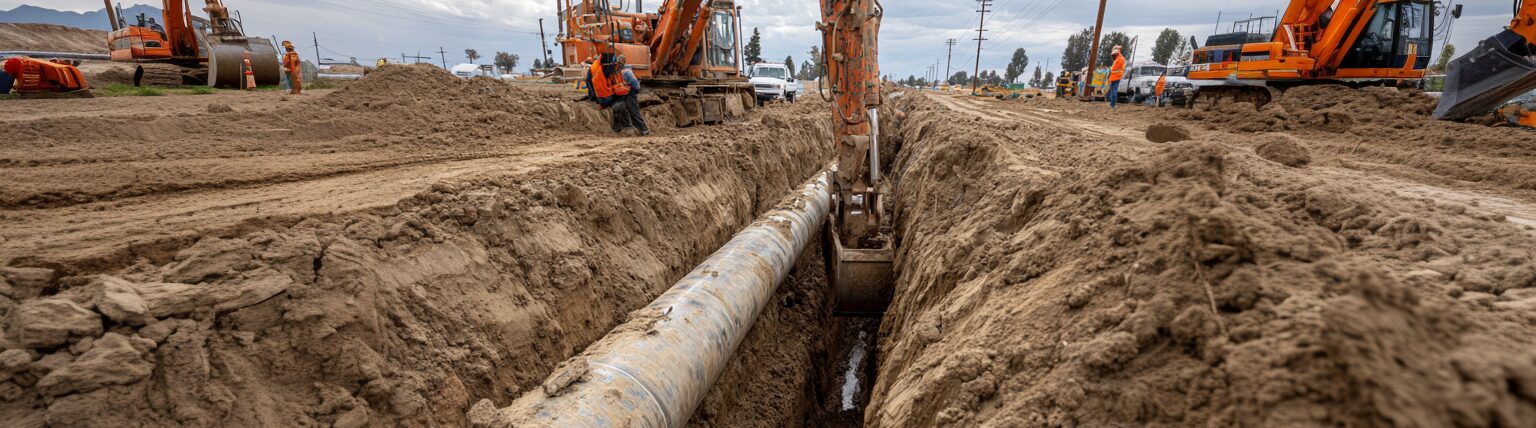
Fiber networks particularly long-haul and metro transport routes are now emerging as a critical bottleneck in digital infrastructure development. While demand for compute capacity continues to surge, the physical pathways that carry data between data centers, cloud regions, and users are increasingly constrained. As a result, developers, network operators, and infrastructure investors are being forced to rethink how fiber routes are designed and constructed.
The Connectivity Gap in Data Center Development
Historically, connectivity planning was considered relatively straightforward. Most major metropolitan areas already had multiple fiber providers, and adding capacity often meant lighting additional wavelengths on existing infrastructure.
Today, that assumption is breaking down.
AI workloads generate enormous east-west traffic between data centers, requiring low-latency, high-capacity interconnection. Hyperscalers demand multiple physically diverse fiber routes for redundancy. Enterprise tenants expect reliable connectivity to cloud on-ramps and internet exchange points.
The result is a dramatic increase in fiber demand that existing infrastructure was never designed to support.
Developers frequently discover late in the process that:
- Existing fiber routes lack sufficient diversity
- Long-haul corridors are congested
- Dark fiber availability is limited
- Carrier presence is thinner than expected
These issues can delay project timelines and complicate leasing discussions with potential tenants.
Why Fiber Diversity Matters
In the digital infrastructure world, redundancy is not optional it is essential.
A single fiber route serving a data center campus introduces a significant operational risk. Physical disruptions caused by construction, natural disasters, or infrastructure failure can take entire facilities offline.
For this reason, hyperscale operators and AI infrastructure developers require route diversity, meaning physically separated fiber pathways that minimize the possibility of a shared failure point.
However, in many markets, historical fiber routes were constructed along the same transportation corridors highways, rail lines, or utility rights-of-way. While this approach simplified construction decades ago, it created clusters of infrastructure that now limit diversity options.
This has forced network builders to think creatively.
Creative Approaches to Building New Fiber Routes
As demand accelerates, the fiber industry is developing innovative approaches to expand network capacity and create new route diversity.
Leveraging Alternative Rights-of-Way
One of the most effective strategies for building diverse fiber paths is identifying underutilized infrastructure corridors.
Examples include:
- Secondary roadways instead of interstate highways
- Energy transmission corridors
- Rural utility easements
- Rail infrastructure partnerships
These alternative pathways allow fiber builders to construct routes that avoid congested legacy corridors while improving network resilience.
Building Long-Haul Bypass Routes
Another emerging strategy is the construction of bypass routes that avoid congested metropolitan fiber pathways.
Rather than routing all long-haul traffic directly through major urban hubs, new fiber networks are being designed to connect secondary markets and edge locations. This approach reduces latency variability while expanding regional connectivity options.
Bypassing congested corridors can also improve route diversity for hyperscale campuses located outside traditional metro centers.
Utilizing Existing Infrastructure Assets
Creative engineering is also enabling fiber networks to leverage existing physical infrastructure.
Examples include:
- Installing conduit along energy transmission lines
- Using pipeline easements for fiber corridors
- Integrating fiber infrastructure with transportation modernization projects
These partnerships can accelerate construction timelines while reducing permitting complexity.
High-Capacity Fiber Design
Modern fiber construction increasingly incorporates high-count fiber cables, often containing hundreds or even thousands of individual fibers. This approach allows network operators to scale bandwidth capacity without repeatedly rebuilding physical infrastructure.
For hyperscalers and AI infrastructure operators, high-count cables provide the flexibility to deploy dedicated fiber pairs for internal transport while still maintaining capacity for future expansion.
Public-Private Infrastructure Collaboration
Municipalities and regional governments are also playing a growing role in facilitating fiber expansion. By coordinating infrastructure planning between utilities, transportation agencies, and telecom providers, communities can create more efficient development pathways.
These collaborations can reduce regulatory friction while ensuring that connectivity infrastructure supports regional economic growth.
The Role of Fiber in AI Data Center Expansion
The rise of AI is fundamentally altering connectivity requirements.
AI training clusters often involve thousands of GPUs communicating simultaneously across multiple data centers. This architecture requires extremely high bandwidth and predictable latency.
In practical terms, this means data center developers must think about connectivity much earlier in the site selection process. Fiber planning can no longer be treated as an afterthought once construction begins.
Instead, connectivity strategy must be integrated with:
- Power infrastructure planning
- Site selection analysis
- Campus expansion modeling
- Tenant acquisition strategy
When fiber infrastructure is planned alongside these other elements, developers can significantly reduce project risk.
Strategic Planning for Future Fiber Demand
As digital infrastructure continues to expand, the importance of proactive fiber planning will only increase.
Investors and developers evaluating new data center sites should consider several key factors:
- Carrier density within the region
- Availability of dark fiber
- Physical route diversity
- Proximity to long-haul backbone routes
- Scalability of existing fiber infrastructure
Sites with strong connectivity fundamentals often experience faster lease absorption and attract higher-value tenants.
Conversely, locations with limited fiber infrastructure may face long development timelines and increased capital costs.
Connectivity as a Competitive Advantage
In the early days of data center development, power availability and land costs were the primary determinants of site viability.
Today, connectivity infrastructure has become equally important.
Developers who proactively evaluate fiber topology, route diversity, and long-haul connectivity are better positioned to deliver resilient campuses capable of supporting AI-scale workloads. Those who neglect these considerations may find themselves constrained by infrastructure limitations that are difficult and expensive to overcome later.
The digital economy depends on both compute and connectivity. As AI continues to accelerate data center development, the networks that link these facilities together will become just as critical as the buildings themselves.
In the race to build the next generation of data centers, fiber infrastructure is no longer just a supporting component it is a strategic foundation.