
The AI infrastructure race is accelerating at a historic pace. Across the United States and globally, developers, hyperscalers, and private equity firms are aggressively pursuing new cloud and AI data center opportunities to support the explosion of artificial intelligence workloads. Nearly every major conversation surrounding these projects centers on one issue: power.
Headlines today are filled with concerns about strained electrical grids, utility capacity shortages, and growing community resistance to large-scale data center developments. In many regions, local residents fear they will ultimately bear the cost of the enormous electricity demands required to support AI compute growth through higher utility rates and stressed public infrastructure.
These concerns are real. But while the industry focuses almost exclusively on power, a second and potentially more limiting infrastructure crisis is quietly emerging in the background:
There is not enough fiber infrastructure to support the next generation of AI and cloud data centers.
Power May Get the Headlines, But Fiber Enables the Business
AI data centers exist for one reason: to generate and distribute compute.
Power enables the compute to occur, but fiber infrastructure enables those computes to move across networks, reach customers, connect cloud regions, and support AI applications globally. Without high-capacity, low-latency connectivity, even the most power-rich data center becomes isolated infrastructure.
This is the reality many investors and developers are beginning to confront:
- A site may have land
- A site may secure power
- A site may even deploy onsite gas turbine generation
But without scalable fiber connectivity and diverse routes, the project cannot fully function as part of the global digital ecosystem.
The result is simple:
No fiber means no monetization of compute.
The Industry Is Solving the Power Problem Faster Than the Fiber Problem
Ironically, the industry has already begun adapting to power constraints.
To accelerate deployment timelines, many AI data center projects are increasingly incorporating:
- Natural gas turbines
- Microgrid strategies
- Behind-the-meter generation
- Hybrid energy approaches
These solutions allow developers to bypass utility bottlenecks and create their own power ramp strategies while waiting for long-term grid expansion.
Fiber infrastructure does not have the same level of deployment flexibility.
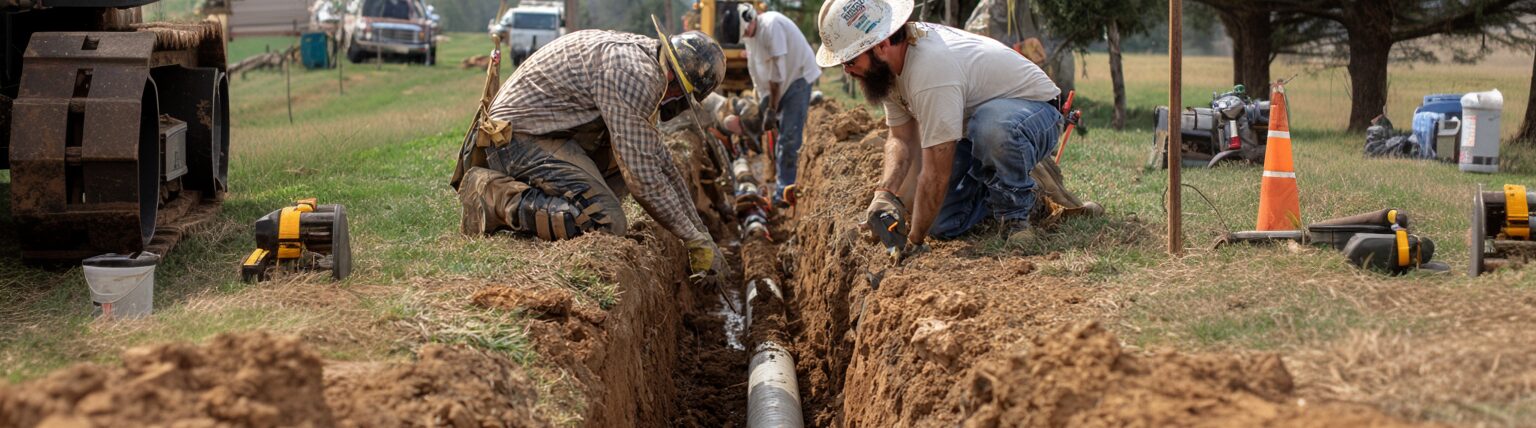
New fiber route construction requires:
- Municipal approvals
- Railroad easements
- Water crossing permits
- Right-of-way negotiations
- Environmental and engineering reviews
In many secondary and rural markets, these processes can delay projects by well over a year. Unlike deploying onsite generation, there is no quick workaround for missing network infrastructure.
Secondary and Rural Markets Face the Greatest Connectivity Challenges
As primary data center markets become constrained by cost and utility limitations, developers are increasingly exploring secondary and rural markets for new AI infrastructure opportunities.
These regions often provide:
- Lower-cost land
- More available power
- Attractive tax incentives
- Faster development pathways
However, they also tend to have the weakest fiber ecosystems.
Many rural and emerging markets lack:
- Dense long-haul fiber routes
- Carrier diversity
- Dark fiber availability
- Redundant network paths
This creates a dangerous mismatch between power availability and connectivity readiness. Developers may secure hundreds of megawatts of capacity only to discover there is insufficient fiber infrastructure to support hyperscale AI workloads.
In practical terms, these projects risk becoming compute islands capable of generating enormous processing power but unable to efficiently distribute or scale it.
Fiber Infrastructure Is Carbon Neutral Digital Infrastructure
An important distinction often overlooked in the public debate is that fiber infrastructure itself is highly sustainable.
Unlike large-scale power generation assets, fiber networks:
- Consume minimal energy
- Produce no direct emissions
- Support remote commerce and digital services
- Improve network efficiency across regions
In many ways, expanding fiber infrastructure is one of the most environmentally efficient forms of infrastructure investment available today.
This matters because while communities may resist new power-intensive developments, fiber infrastructure can provide direct and lasting benefits to the regions where it is deployed.
Rural Communities Stand to Benefit the Most
The expansion of fiber infrastructure to support AI data centers could create transformational opportunities for secondary and rural markets beyond the data centers themselves.
Once fiber networks are established, communities gain access to:
- Better broadband access
- Improved business connectivity
- Expanded educational resources
- Enhanced telemedicine capabilities
- Greater access to cloud services and digital commerce
In effect, data center-driven fiber expansion could become a catalyst for broader rural digital transformation.
The same infrastructure needed to support hyperscale AI workloads can also:
- Improve economic development
- Attract new businesses
- Expand remote work opportunities
- Increase connectivity for underserved populations
This creates a compelling dual-benefit scenario:
Data centers receive the connectivity they require, while communities gain long-term digital infrastructure that can strengthen regional economies for decades.
Fiber Is Becoming the True Constraint
The industry is rapidly approaching a turning point where fiber availability not power availability becomes the primary gating factor for AI infrastructure growth.
The reason is straightforward:
- Power can increasingly be self-generated
- Land can still be acquired
- Capital remains available
But fiber infrastructure takes time, coordination, permitting, and long-term planning to build.
And unlike power generation, there is no practical substitute for high-capacity optical connectivity.
This reality is forcing a shift in how sophisticated developers evaluate new opportunities. Fiber is no longer a secondary engineering consideration it is becoming one of the most important infrastructure assets in the entire AI ecosystem.
Conclusion: The Next AI Infrastructure Race Will Be About Connectivity
The AI revolution is driving one of the largest infrastructure buildouts in modern history. But while the public conversation remains focused on electricity consumption, the industry’s next major bottleneck is quietly forming beneath the surface.
Fiber infrastructure will determine:
- Which markets can scale
- Which projects can monetize compute
- Which communities participate in the digital economy
- Which investors capture long-term value
The future of AI infrastructure will not simply be decided by who has access to power.
It will be decided by who can connect that power to the rest of the world.
Frequently Asked Questions
Power availability alone does not make a site AI-ready. Investors should evaluate carrier density, dark fiber availability, route diversity, long-haul connectivity, and future network scalability. A comprehensive fiber assessment helps determine whether a site can support hyperscale AI and cloud operations before significant capital is deployed.
Insufficient fiber infrastructure can lead to construction delays, unexpected capital expenditures, reduced tenant demand, and lower long-term asset value. In extreme cases, a site may secure land and power but remain unable to monetize compute because it lacks the connectivity needed to serve customers and cloud ecosystems.
Fiber infrastructure directly affects scalability, resiliency, tenant attractiveness, and future expansion potential. Sites with access to diverse carrier networks and dark fiber resources are often more valuable because they can support higher-density workloads and more demanding enterprise and hyperscale customers.
Route diversity means having multiple physical fiber paths entering and leaving a facility. Without route diversity, a single fiber cut can disrupt connectivity. Redundant routes improve reliability, reduce operational risk, and increase the attractiveness of a facility to cloud providers, AI operators, and enterprise tenants.
Many emerging markets offer affordable land, available power, and attractive incentives, but they often lack dense fiber ecosystems. Investors may discover that connecting a site to sufficient carrier infrastructure requires substantial time and capital, creating schedule risks that impact projected returns.
Yes. AI workloads require enormous amounts of bandwidth and network scalability. Dark fiber provides dedicated capacity, greater control, and future growth flexibility that many hyperscale and AI operators prefer when selecting data center locations.
Investors should evaluate power and fiber infrastructure simultaneously. While power enables compute generation, fiber enables compute monetization. A successful investment requires both. Understanding connectivity risks early can help avoid costly surprises and improve the long-term viability of a project.