
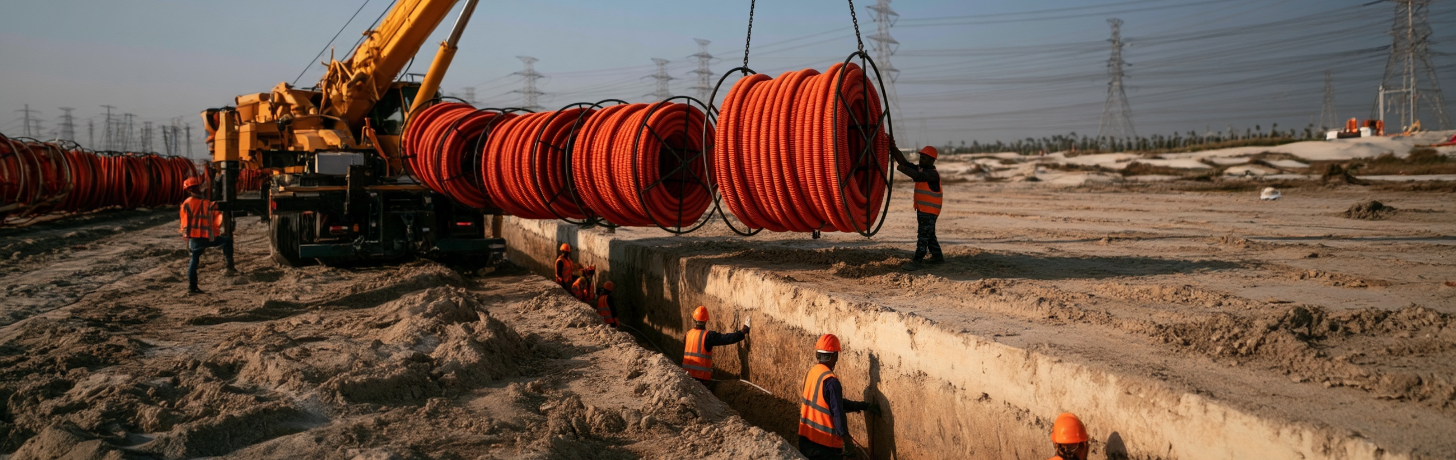
On September 29, 2026, AT&T announced a multiyear agreement with Corning valued at more than $3 billion to supply fiber and cable for AT&T’s network expansion.
The timing is significant.
AT&T says growing demand from AI, cloud computing, connected devices, and other data-intensive applications is driving the need for faster, more resilient, and scalable fiber networks. The company is targeting 60 million fiber locations by the end of 2030 and says the average AT&T Fiber household now uses more than 1 TB of data per month—five times the level reported in 2016.
For investment professionals evaluating data center opportunities, the message is straightforward:
Fiber is becoming an increasingly strategic component of digital infrastructure—and it should be a top consideration when evaluating a potential data center site.
Fiber Is No Longer Just a Connectivity Detail
When investors evaluate a prospective data center site, the initial checklist typically focuses on familiar considerations:
- Power availability and time to energization
- Land and site characteristics
- Zoning and permitting
- Water and other utilities
- Tax incentives
- Proximity to customers and markets
- Construction costs and schedule
Connectivity can sometimes receive less attention during the initial evaluation.
That can be a mistake.
A data center is ultimately part of a much larger digital ecosystem. It needs to connect to customers, cloud providers, other data centers, Internet Exchanges, carrier networks, and increasingly distributed AI infrastructure.
For AI workloads in particular, network performance can become a critical part of the infrastructure equation. Capacity, latency, route diversity, scalability, and time to deploy all influence how effectively a site can participate in that ecosystem.
A site with power but inadequate connectivity is not necessarily a viable data center site.
AT&T Is Making a $3 Billion Bet on Fiber
AT&T’s agreement with Corning provides a useful indicator of the scale of investment taking place in fiber infrastructure.
Under the agreement, Corning will supply the fiber and cable AT&T needs to expand its network. AT&T says the agreement supports its goal of reaching 60 million fiber locations by the end of 2030. The company has also committed more than $250 billion over five years toward U.S. connectivity infrastructure.
AT&T’s announcement specifically connects this investment to rising demand from AI and other data-intensive applications.
This isn’t an isolated development. AT&T’s acquisition of Lumen’s Mass Markets fiber business also expanded its footprint, adding more than 4 million fiber locations and more than 1 million subscribers in markets including Denver, Seattle, and Salt Lake City.
For investors, these developments reinforce a broader infrastructure trend:
The network connecting digital infrastructure is itself becoming an increasingly important infrastructure asset.
The Fiber Question Investors Should Ask
The first question shouldn’t simply be:
“Is there fiber near the site?”
It should be:
“Does this site have a credible path to the fiber connectivity the project will require?”
Those are very different questions.
Publicly available information can provide a useful starting point. Investors can research:
- Internet Exchange locations
- Carrier hotels
- Existing data centers
- Carrier network presence
- Fiber routes
- Commercial network intelligence platforms
- Dark and lit fiber availability
- Planned network expansion
But even sophisticated connectivity maps don’t necessarily provide the complete picture.
A route shown nearby may not have the capacity required by a new data center. Multiple carriers may share the same physical corridor. A network may be close to the property but difficult or expensive to extend to it. A seemingly diverse network may ultimately depend on the same right-of-way.
And some of the most important information may not yet appear on a map.
Fiber Infrastructure Is a Moving Target
Fiber networks are constantly changing.
New routes are being planned and constructed. Carriers are expanding their footprints. Network operators are adding capacity. Data center developments can create enough demand to justify new infrastructure.
That means today’s fiber map isn’t necessarily tomorrow’s fiber network.
This is particularly important for investors considering secondary and emerging data center markets.
A site doesn’t necessarily need to sit directly on top of an existing dense fiber corridor to be viable. There may be a practical path to bringing new connectivity to the site.
But determining that requires more than identifying a nearby fiber route.
It requires understanding the network, the operators, the physical routes, the available capacity, the potential interconnection points, the rights-of-way, the engineering requirements, and the commercial realities of extending the network.
That’s Where Edgeology Comes In
Edgeology helps investors and developers answer those questions before connectivity becomes a project constraint.
Edgeology’s engineers can analyze the fiber infrastructure surrounding a prospective data center site, including carrier presence, network ownership, dark and lit fiber availability, capacity, route diversity, and potential connectivity paths.
But the value doesn’t stop at analysis.
When a site doesn’t have the connectivity required today, Edgeology can help explore how to create it.
That can include working with carriers and fiber network builders to identify potential new routes, evaluate extension options, develop outside-plant strategies, and facilitate the conversations needed to bring new infrastructure to a site.
In other words, Edgeology isn’t limited to telling an investor that a site has a fiber problem.
The company can help determine whether that problem can be solved—and what solving it could require.
Don’t Confuse Fiber Proximity With Fiber Readiness
One of the most important distinctions in data center site diligence is the difference between fiber proximity and fiber readiness.
A fiber route passing a mile from a parcel doesn’t necessarily mean the parcel can be connected quickly.
An existing data center five miles away with multiple carriers doesn’t necessarily mean those carriers can economically extend service to a new site.
A commercial network map showing several providers doesn’t necessarily mean the site will have the capacity, redundancy, or physical diversity required by the project.
These details matter because connectivity can affect more than network performance.
It can influence development schedules, construction costs, tenant requirements, time-to-revenue, scalability, and ultimately the investment thesis for the site.
Fiber Should Be Evaluated Before Capital Is Committed
The AT&T–Corning agreement is another reminder that fiber infrastructure is attracting substantial investment because demand for data continues to grow.
For data center investors, the takeaway isn’t that every site needs to have an existing fiber network immediately adjacent to the property.
The takeaway is that connectivity needs to be evaluated with the same rigor as power, land, and other critical infrastructure.
Before committing capital to a prospective data center site, investors should understand:
What fiber exists today?
Who owns it?
What capacity is actually available?
Are there truly diverse routes?
Where are the practical connection points?
What networks are being planned or constructed?
Can new fiber be brought to the site?
How long could that take?
What will it cost?
Those answers can change the way an investment team views a property.
Turn Fiber From an Unknown Into a Known
The data center industry is entering an era where power and fiber are increasingly interconnected components of site viability.
AT&T’s $3 billion-plus commitment to Corning is one highly visible example of the scale of investment being made in fiber infrastructure as data demand grows.
For investors, fiber should no longer be treated as a box to check late in the development process.
Evaluate it early. Understand the risks. Identify the opportunities. And determine whether connectivity can support the investment before you go too far down the path.
That’s where Edgeology can help.
Before you put capital into a new data center site, talk to the engineers who understand the fiber network—and know how to help build what isn’t there yet.